Arizona State Cross Stitch Pattern: A Designer's Review
When I first opened the Arizona State Cross Stitch Pattern, my immediate thought wasn't just about the aesthetic appeal, but about its viability in a real-world production environment. As someone who spends hours hunched over hoops and managing inventory for a small craft business, I look at every new design through a lens of practicality. Does this work on a textured tote bag? Will the details hold up on a stretched sweatshirt? This digital file, categorized under Cross Stitch Patterns and Graphics, offers a specific set of tools for the modern maker, but it requires a thoughtful approach to yield the best finished product.
First Impressions and Visual Personality
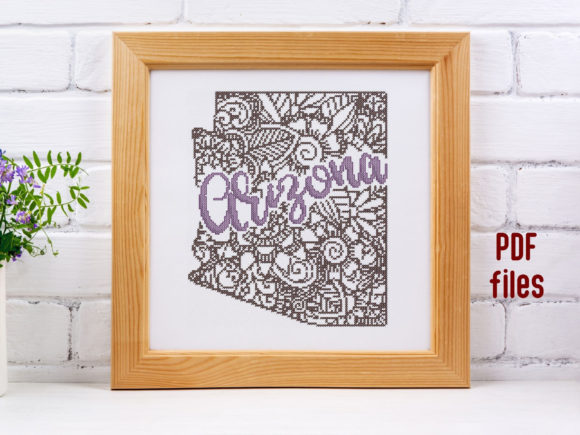
The mood of this design is distinctly regional yet versatile. It captures the essence of the Southwest without relying on clichés that might date quickly. The layout is divided into sections, which is a smart move for a pattern of this nature. It suggests that the designer understands the need for clarity when working with complex color changes or large areas. The inclusion of both a full-color pattern and a black-and-white version shows a consideration for different working styles; some of us need the vibrant guide, while others prefer the high-contrast clarity of a monochrome chart to track progress on dark fabrics.
Visually, the pattern feels grounded. It has a weight to it that suggests it would sit well on heavier materials like canvas or denim, rather than getting lost on sheer linens. For an Etsy seller looking to expand their catalog beyond generic florals, this offers a strong geographical hook that appeals to locals and tourists alike. The visual personality is bold enough to serve as a focal point on a tote bag design or a statement piece on a home decor item.
Real-World Application: The Custom Sweatshirt Scenario
To truly test the waters, I imagined a specific client request: a custom sweatshirt embroidery order for a group of friends moving to Phoenix. This is where the rubber meets the road. Using the Arizona State Cross Stitch Pattern on a fleece-backed cotton blend presents unique challenges compared to standard Aida cloth. The texture of the sweatshirt fabric can obscure fine details, so the sectioned nature of this PDF becomes crucial. It allows me to isolate specific areas and ensure my stitch tension remains consistent across the garment.
In this scenario, the design's structure supports the creation of a high-value personalized gift. If I were stitching this by hand for a boutique client, the clear segmentation helps maintain accuracy over long sessions. For those adapting this for machine use—perhaps converting the graphic into a digital embroidery file for a hybrid project—the distinct sections provide a roadmap for programming stitch types. Whether utilizing a running stitch for outlines or a fill stitch for solid blocks of color, the underlying geometry of the pattern holds up well. It avoids the trap of being too dense, which is critical when working on stretchy fabrics where excessive thread can cause puckering.
Navigating Fabric Choices and Technical Constraints
While the design is robust, there are areas where caution is advised. If you are planning to use this on a cap or a curved surface, be mindful of the hoop size limitations. The pattern's width might require a larger hoop than what fits comfortably on a standard cap frame. In such cases, breaking the design down further or adjusting the scale is necessary to prevent distortion. Similarly, on dark fabrics, the black-and-white scheme provided in the download is invaluable. It allows you to visualize contrast before committing thread to fabric, ensuring your thread colors pop against the background rather than blending in.
Textured fabrics like linen or burlap add character but can eat up fine details. If your project involves an embroidered patch intended for frequent washing, consider the stitch density. While this is a cross-stitch pattern, if you are translating it into machine embroidery, avoid overly dense satin stitch borders that might become stiff. Instead, opt for a lighter touch that allows the fabric to breathe. Always test the design on scrap fabric first. This cannot be overstated. A quick test stitch reveals how the stabilizer interacts with the material and whether the design maintains its integrity after a wash cycle.
Commercial Viability and Brand Consistency
For small shop product lines, consistency is key. This pattern lends itself well to a cohesive collection. Imagine a series featuring different state designs, all sharing the same structural DNA. This builds brand recognition and encourages customers to collect multiple items. The professional look of the segmented charts also aids in creating high-quality printable mockups for your online store. When customers see a clear, well-organized presentation of the design process, it builds trust in the quality of the handmade product they are about to purchase.
However, before listing this as part of your craft business offerings, you must verify the licensing terms. The description notes it is a digital PDF with schemes, but it does not explicitly detail commercial rights for selling finished physical goods versus digital derivatives. Always confirm whether you can sell the stitched finished product or if the license is restricted to personal use. This due diligence protects your business from potential legal issues and ensures ethical practices within the creative community.
Final Thoughts on Execution
The Arizona State Cross Stitch Pattern is a solid addition to any designer's library, particularly for those focusing on regional themes or custom apparel. Its strength lies in its organization and adaptability. Whether you are creating holiday embroidery for family gifts, baby embroidery for a nursery welcome, or commercial embroidery for a local sports team, the design provides a reliable foundation. Just remember to respect the material you are working with. Use the right stabilizer, check your tension, and let the natural rhythm of the cross-stitches shine through. With careful execution, this pattern transforms from a simple graphic into a cherished keepsake that stands the test of time.